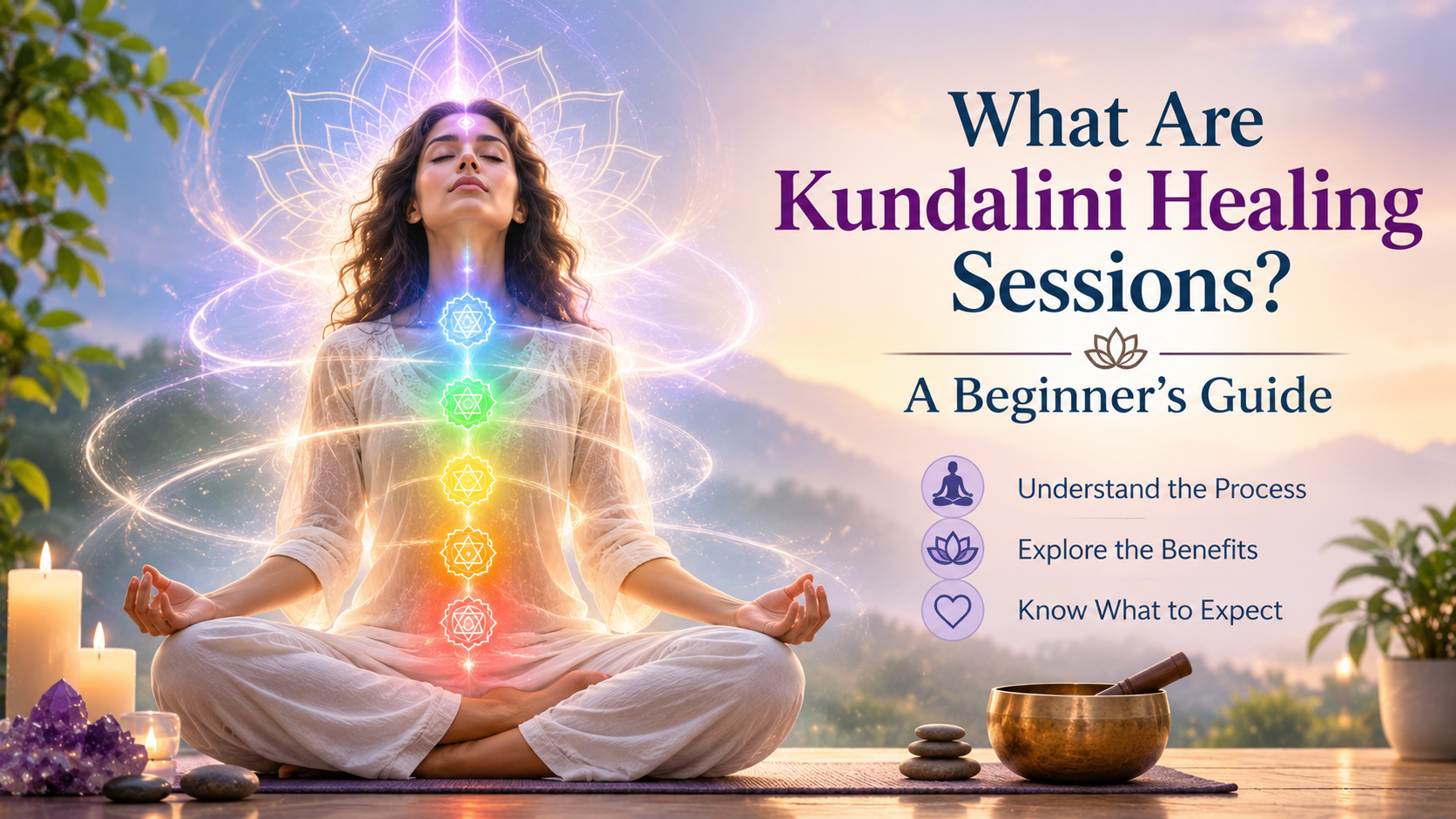
Spiritual growth can raise questions about energy, emotions, and our connection with ourselves. If you have heard about Kundalini awakening and want to understand what it involves, learning about Kundalini healing sessions can be a helpful starting point. At Spirit Path Healing, we recognize that every spiritual journey is unique. This guide explores the meaning of Kundalini, what a session may involve, and how to approach the experience with curiosity and realistic expectations.
What Is Kundalini?
Kundalini is a concept rooted in Indian spiritual traditions, particularly certain forms of yoga and Tantra. It is often described as a dormant spiritual energy associated with the base of the spine. Within these traditions, awakening Kundalini is connected with spiritual development and expanded awareness.
Different traditions interpret Kundalini in different ways. It is important to recognize that Kundalini is a spiritual concept, not a scientifically established physical force that can be measured in the body.
Why Are People Interested in Kundalini?
Some people explore Kundalini through meditation, breathwork, and other spiritual practices. Others become curious after noticing unusual sensations or changes during meditation.
The experience varies from person to person. Learning about the tradition, understanding the practices involved, and approaching the subject without rigid expectations can help you decide whether further exploration aligns with your interests.
What Are Kundalini Healing Sessions?
Kundalini healing explores Kundalini-related experiences and spiritual development. Depending on the practitioner’s approach, they may incorporate conversation, meditation, breathwork, relaxation, or other reflective practices.
There is no single standardized format for these sessions. Techniques and intentions vary, so ask the practitioner what a session includes before booking.
What Happens During a Session?
A session may involve several elements, depending on the provider:
- Initial conversation: Discuss your intentions, previous spiritual practices, expectations, and concerns.
- Grounding and relaxation: Use gentle breathing, mindfulness, or quiet reflection to settle into the session.
- Guided practices: Explore meditation, awareness of bodily sensations, or other techniques within the practitioner’s scope of practice.
- Reflection: Discuss your experience, including anything that felt comfortable or uncomfortable.
- Integration: Consider how to incorporate useful reflections into your daily routine without rushing to interpret every sensation as a spiritual sign.
A responsible practitioner should explain the process, respect your boundaries, and allow you to pause or stop whenever you feel uncomfortable.
What Can Beginners Expect?
Your experience will depend on the methods used, your expectations, and your individual circumstances. Some people find guided spiritual practices relaxing or meaningful, while others may feel uncertain about what they experience.
You might become more aware of your breathing, thoughts, emotions, or bodily sensations. You may also find that your mind wanders or that nothing particularly unusual happens. Neither response automatically indicates spiritual progress or a lack of it.
Keep Your Expectations Realistic
When exploring Kundalini, remember that there is no universal experience every participant should expect.
- You do not need intense sensations to benefit from quiet reflection.
- Emotional responses can have many explanations and should not automatically be attributed to Kundalini.
- A session cannot guarantee spiritual awakening, trauma resolution, or a particular healing outcome.
- You can ask questions, decline a technique, or stop a session at any time.
- Taking time to reflect afterward may be more useful than trying to interpret every detail immediately.
Approach the experience as an opportunity for exploration rather than a test you need to pass.
Potential Benefits and Important Limitations
People may explore Kundalini-related practices to deepen their spiritual understanding, establish a reflective routine, or develop a stronger connection with their emotions and sense of purpose.
Some participants may find meditation or gentle breathing helpful for relaxation and self-awareness. However, these potential benefits depend on the practices used and the individual. There is limited scientific evidence specifically establishing Kundalini healing sessions as an effective treatment.
Understanding the Limitations
Kundalini healing should not be presented as a substitute for medical care or evidence-based mental health treatment. If you experience persistent anxiety, significant sleep disruption, distressing changes in perception, or other concerning symptoms, consult an appropriate healthcare professional rather than assuming the experience is a spiritual awakening.
Intensive breathing practices can cause dizziness, tingling, or other physical effects. Discuss relevant health concerns with your practitioner beforehand, and avoid techniques that feel unsafe or uncomfortable.
How to Prepare for Your First Session
Preparing a few questions before your first session can help you approach a new spiritual practice with greater clarity. Think about what interests you, what you hope to learn, and which boundaries matter to you.
Before the Session
- Identify your intention: Decide whether you want to learn about spiritual traditions, explore meditation, or better understand an experience you have had.
- Ask about the method: Find out whether the session includes meditation, breathwork, physical contact, or other techniques.
- Discuss your boundaries: Explain your preferences regarding touch, emotional exercises, and the intensity of any practice.
- Choose a comfortable setting: Allow enough time so you do not have to rush into or out of the session.
- Stay open without suspending judgment: Respect the spiritual tradition while asking questions and making informed choices.
After the Session
Give yourself time to return to your normal routine. You may find it useful to write down what you noticed, how you felt, and which parts of the session were comfortable or uncomfortable.
Simple activities such as eating regularly, resting, taking a gentle walk, and maintaining your usual sleep routine can help you feel grounded. There is no need to chase intense experiences or repeat a practice that leaves you distressed.
At Spirit Path Healing, we encourage a thoughtful approach to inner exploration that respects individual experiences and personal boundaries. Before booking, write down your questions and discuss them with a practitioner.
How Does Kundalini Healing Differ From Soul Retrieval?
Kundalini-related practices and soul retrieval come from different spiritual frameworks, even though both may interest people exploring personal transformation.
Kundalini practices generally focus on spiritual energy, awareness, and awakening within particular Indian spiritual traditions. Soul retrieval sessions, by contrast, are associated with shamanic traditions and the spiritual idea of recovering aspects of the self believed to have become disconnected following difficult experiences.
Understanding Soul Retrieval
In some contemporary shamanic practices, soul retrieval is used as a spiritual framework for exploring feelings of disconnection, loss, or incompleteness. Its traditional spiritual explanations should not be confused with scientifically established mechanisms of psychological healing.
Soul retrieval sessions are not interchangeable with Kundalini practices, psychotherapy, or medical treatment. Before choosing either approach, ask about the practitioner’s methods, training, expectations, and boundaries.
Which Approach May Suit Your Interests?
Consider what you want to explore:
- Kundalini: You are interested in Indian spiritual traditions, meditation, and the concept of spiritual awakening.
- Shamanic healing: You want to explore shamanic perspectives on personal wholeness and spiritual reconnection.
- Soul retrieval: You want to learn about a specific shamanic practice and what a practitioner means by recovering lost aspects of the self.
Understanding these differences can help you make an informed decision without assuming that one practice is necessarily better than another.
Choosing a Practitioner You Can Trust
A supportive practitioner should make it easier for you to ask questions, understand the process, and decide whether the approach is right for you. Look for transparency about the methods used, relevant training, fees, and limitations.
Questions to Ask Before Booking
- What training and experience do you have with this specific practice?
- What happens during a typical session?
- Are any techniques physically demanding or emotionally intense?
- How do you respond if a participant feels overwhelmed?
- What are the fees, cancellation terms, and session limits?
- Do you make medical or psychological claims about the results?
Be cautious of anyone who guarantees an awakening, promises to cure a health condition, pressures you to purchase additional sessions, or discourages you from seeking appropriate healthcare. You deserve an approach that respects your autonomy and allows you to make informed decisions.
Begin Your Spiritual Exploration With Intention
Exploring Kundalini can be an opportunity to learn about an important spiritual concept, develop a reflective practice, and become more attentive to your experiences. You do not have to rush, chase extraordinary sensations, or accept every interpretation offered to you. Curiosity, patience, and clear boundaries are valuable starting points.
At Spirit Path Healing, we invite you to explore our approach to spiritual growth and learn more about the practices we offer. Visit our website to review the available services, prepare your questions, and contact us to discuss whether a session aligns with your interests and needs.
Frequently Asked Questions
1. How Do I Know if Kundalini Healing is Right for Me?
Consider your intentions, comfort level, and interest in the spiritual traditions behind Kundalini. Before booking Kundalini healing sessions, ask the practitioner about the methods used, their training, and any relevant precautions. Choose an approach that respects your boundaries and does not promise guaranteed outcomes.
2. What Is the Difference Between Kundalini Healing and Soul Retrieval Sessions?
Kundalini-related practices draw on Indian spiritual traditions and focus on spiritual energy and awakening. Soul retrieval sessions draw on shamanic traditions and the spiritual concept of recovering disconnected aspects of the self. The methods and underlying beliefs differ, so ask a practitioner to explain their approach before deciding which is appropriate for your interests.
3. Can Kundalini Healing Sessions Help With Trauma or Emotional Distress?
Some people explore kundalini healing sessions as part of their personal or spiritual development, but there is insufficient evidence to establish them as a treatment for trauma. Soul retrieval sessions may also be meaningful within a person’s spiritual framework, but they should not replace evidence-based trauma care. If emotional distress is affecting your daily life, consider consulting a qualified mental health professional.



Leave a Reply